19 Vintage Hairstyles That Never Go Out of Style
There’s an undeniable magic to vintage hairstyles that transcends fleeting trends, offering a glimpse into eras defined by unparalleled elegance and charm. These iconic looks, from the roaring twenties to the swinging sixties, continue to captivate with their intricate designs, sophisticated silhouettes, and inherent allure. They tell stories of cultural shifts, fashion revolutions, and the timeless pursuit of beauty, making them a perpetual source of inspiration for modern stylists and enthusiasts alike.
Whether you’re seeking a touch of old-world glamour for a special event, a unique everyday look, or simply a deep dive into historical beauty trends, vintage hairstyles offer a vast and captivating repertoire. We’ve curated a list of 19 truly iconic styles that have not only stood the test of time but continue to influence contemporary fashion. Prepare to be inspired as we journey through the decades, highlighting the unique characteristics and enduring appeal of these magnificent retro coiffures.
1. Finger Waves
Originating in the 1920s, finger waves are perhaps the most iconic symbol of the flapper era, characterized by their sleek, S-shaped curls meticulously sculpted close to the scalp. This elegant style was achieved by wetting the hair and pressing it into waves using fingers and a comb, then allowing it to dry naturally to set the pattern. The result was a sophisticated, polished look that perfectly complemented the short bobs and daring fashion of the Jazz Age.
Today, finger waves evoke instant vintage glamour, making them a popular choice for formal events, period costumes, or anyone wanting to channel sophisticated retro vibes. While traditionally seen on shorter hair, modern interpretations can extend these fluid, undulating patterns to longer lengths, often paired with a deep side part for dramatic effect. Mastering this technique takes practice, but the stunning, architectural beauty of finger waves is undeniably worth the effort for a truly authentic vintage statement.
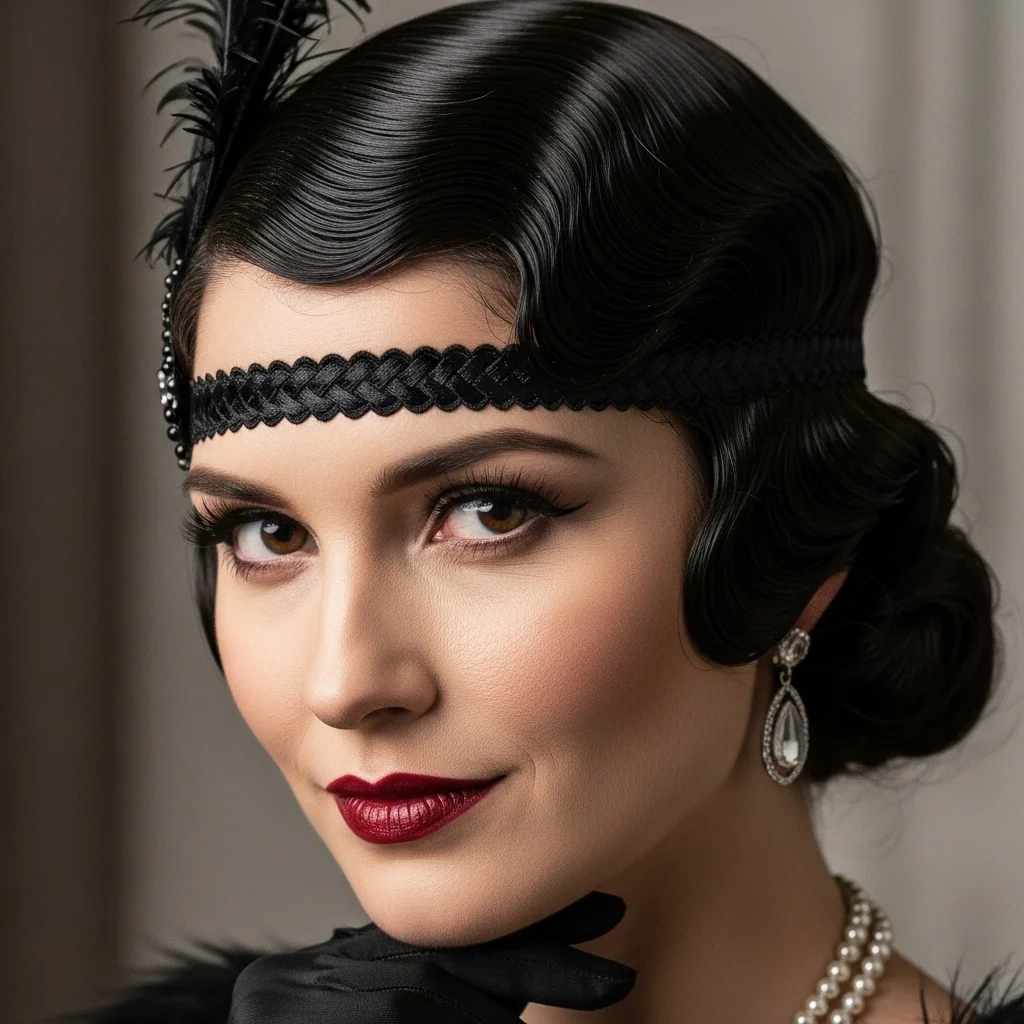
The quintessential 1920s statement: sleek, intricate finger waves radiating timeless elegance.
2. The Classic Bob
The classic bob, especially prominent in the 1920s, represented a radical departure from the long, flowing Victorian locks, symbolizing women’s newfound freedom and independence. Typically cut chin-length, blunt, and often paired with straight bangs, this sharp, geometric haircut was revolutionary. It offered a chic, low-maintenance style that was both daring and undeniably fashionable, perfectly framing the face and highlighting features.
Its enduring appeal lies in its versatility and crisp simplicity, making it a staple across decades and constantly reinvented in various forms. Modern bobs can range from blunt cuts to layered, asymmetrical styles, but the essence of the 1920s classic bob – a bold, strong silhouette – remains a powerful source of inspiration. It’s a sophisticated choice for those seeking a statement haircut that combines historical significance with contemporary chic.
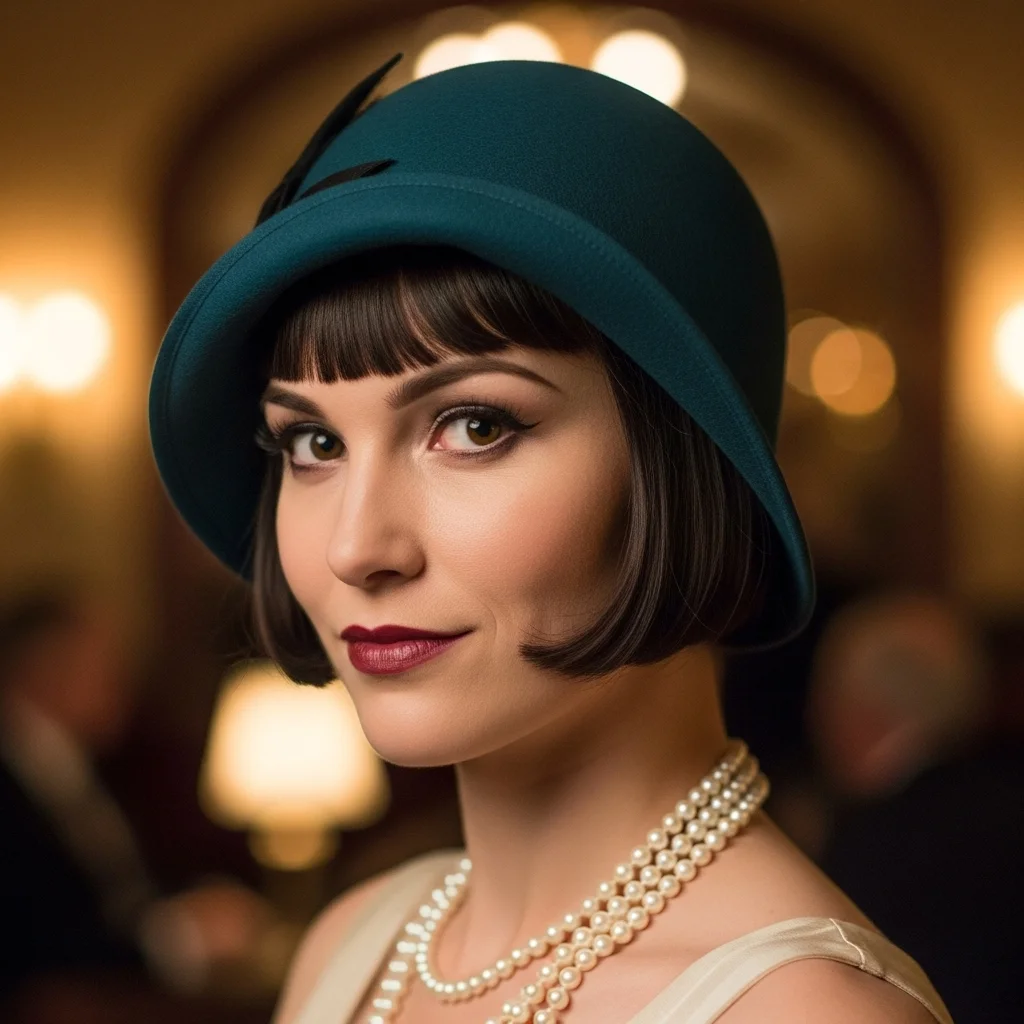
The revolutionary classic bob: sharp lines, fierce independence, and everlasting style from the 1920s.
3. Marcel Waves
Predating finger waves slightly, Marcel waves were popularized in the late 19th and early 20th centuries by French hairdresser Marcel Grateau, using a heated curling iron to create deep, consistent, and lasting waves. Unlike the finger-sculpted technique, Marcel waves offered a more uniform and durable wave pattern, often seen on more elaborate updos or longer hair that still adhered to Victorian standards before the bob became prevalent. This method provided a sophisticated and polished look, favored by high society.
While sharing a similar aesthetic to finger waves, Marcel waves are distinguished by their deeper, more structured ‘S’ patterns that maintain their shape for longer. This opulent style brings a touch of old-world Hollywood glamour to any look, perfect for a vintage-themed gala or a sophisticated evening event. Though it requires specific tools and technique, the dramatic and luxurious finish of Marcel waves makes them a truly captivating choice for those who appreciate historical hairstyling artistry.
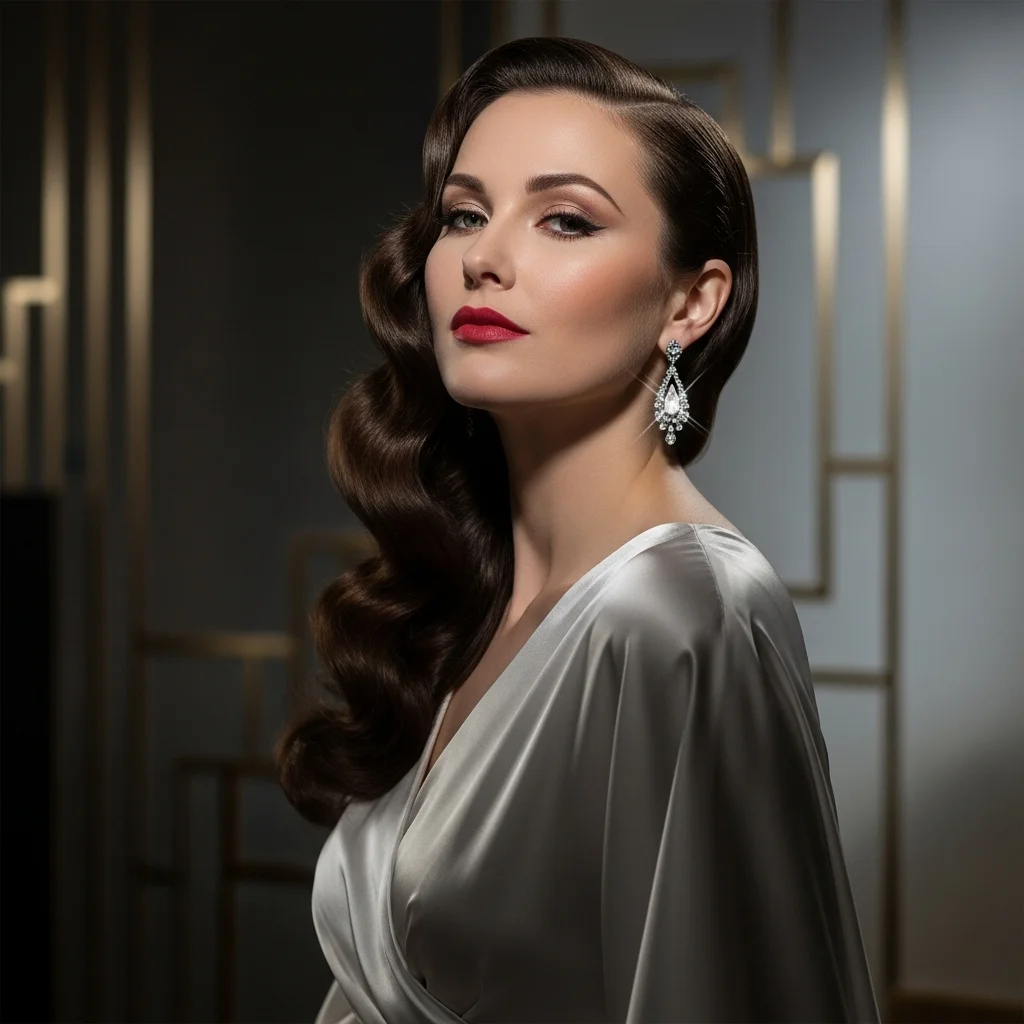
The structured elegance of Marcel waves, a timeless symbol of early 20th-century sophistication.
4. Pin Curls
Pin curls are a fundamental technique that has been used since the 1930s and 40s to create a variety of vintage wavy and curly styles, acting as the building blocks for many iconic looks. Small sections of hair are curled around a finger, secured flat against the scalp with a bobby pin, and allowed to set, often overnight or with the aid of heat. This method creates long-lasting, bouncy curls that can then be brushed out into soft waves or tight ringlets.
Their versatility makes pin curls an indispensable part of any vintage hairstyling repertoire, allowing for customization from subtle volume to dramatic, defined curls. They are perfect for achieving that classic Hollywood wave, a fluffy poodle cut, or simply adding texture and body to otherwise flat hair. Learning to master pin curls opens up a world of retro styling possibilities, proving that sometimes the simplest techniques yield the most stunning results.
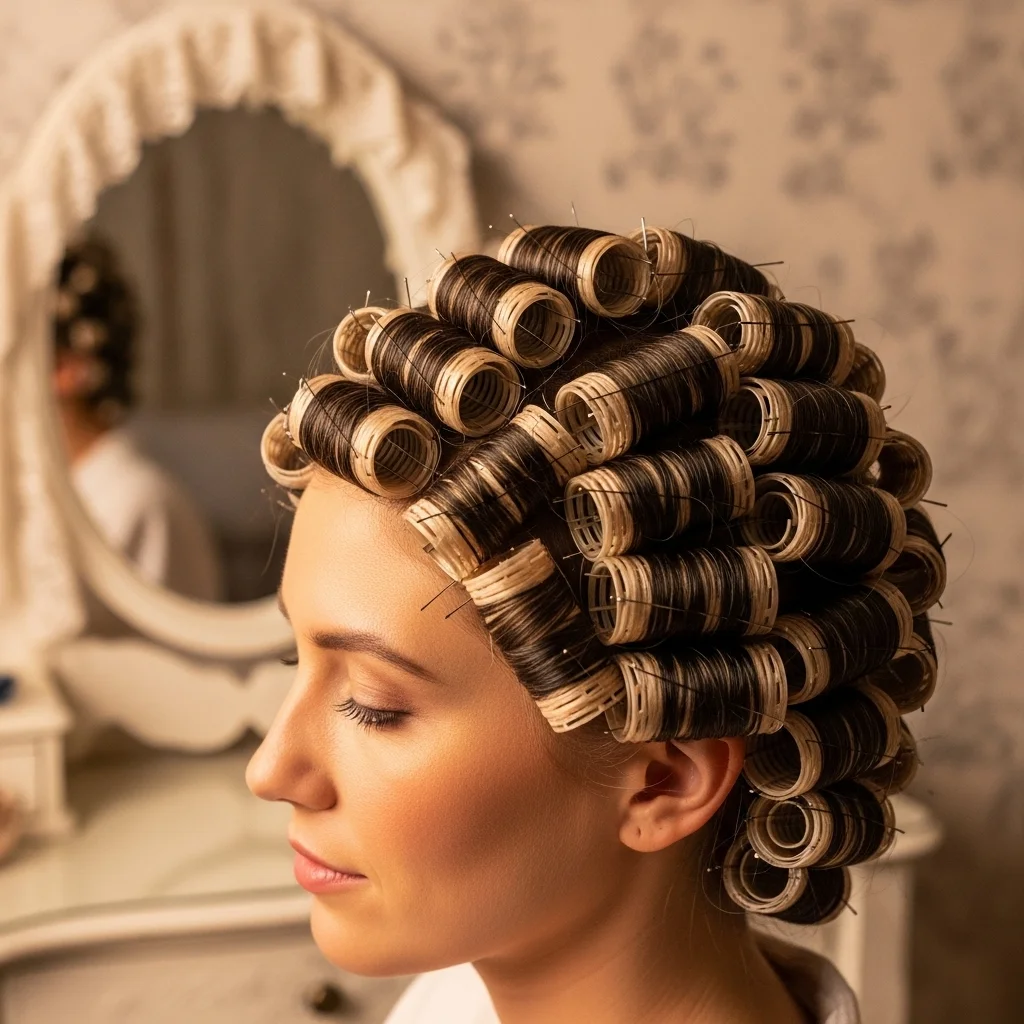
The secret to enduring vintage waves: the meticulous art of pin curls, setting perfection.
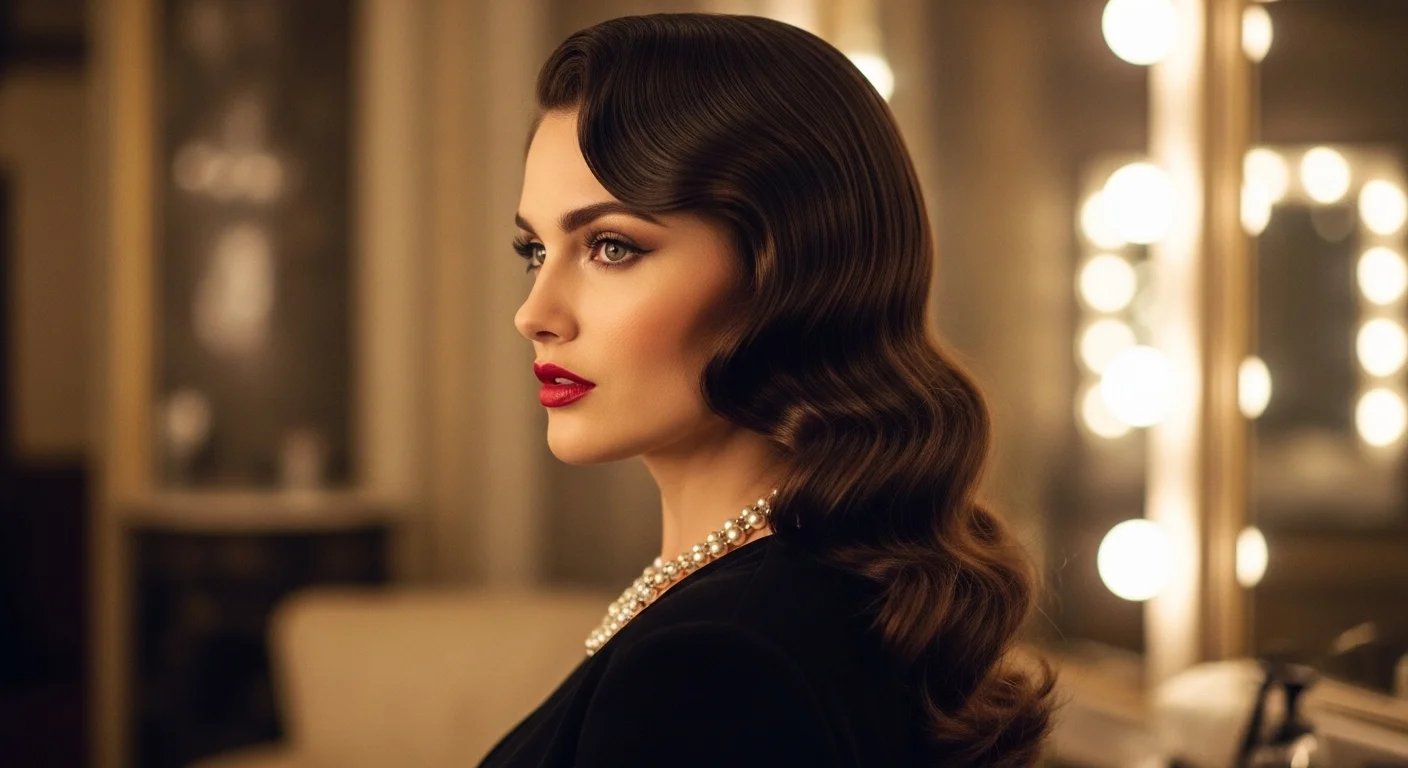
5. Soft Waves with Side Part
The 1930s and 40s embraced a more romantic and softer aesthetic compared to the sharp styles of the 20s, with soft waves styled with a deep side part becoming a signature look. This style emphasized fluidity and grace, often featuring gentle, sweeping waves that cascaded over one shoulder or framed the face elegantly. It conveyed an air of understated glamour and femininity, perfectly complementing the sophisticated fashion of the era.
This timeless hairstyle continues to be a favorite for its effortlessly chic appeal, proving that less can often be more when it comes to sophisticated beauty. It’s a versatile look that can be dressed up or down, offering a touch of vintage charm without feeling overly costume-like. Achieving these soft, flowing waves requires a good curling iron or hot rollers, followed by a gentle brushing to create a seamless, natural-looking ripple.
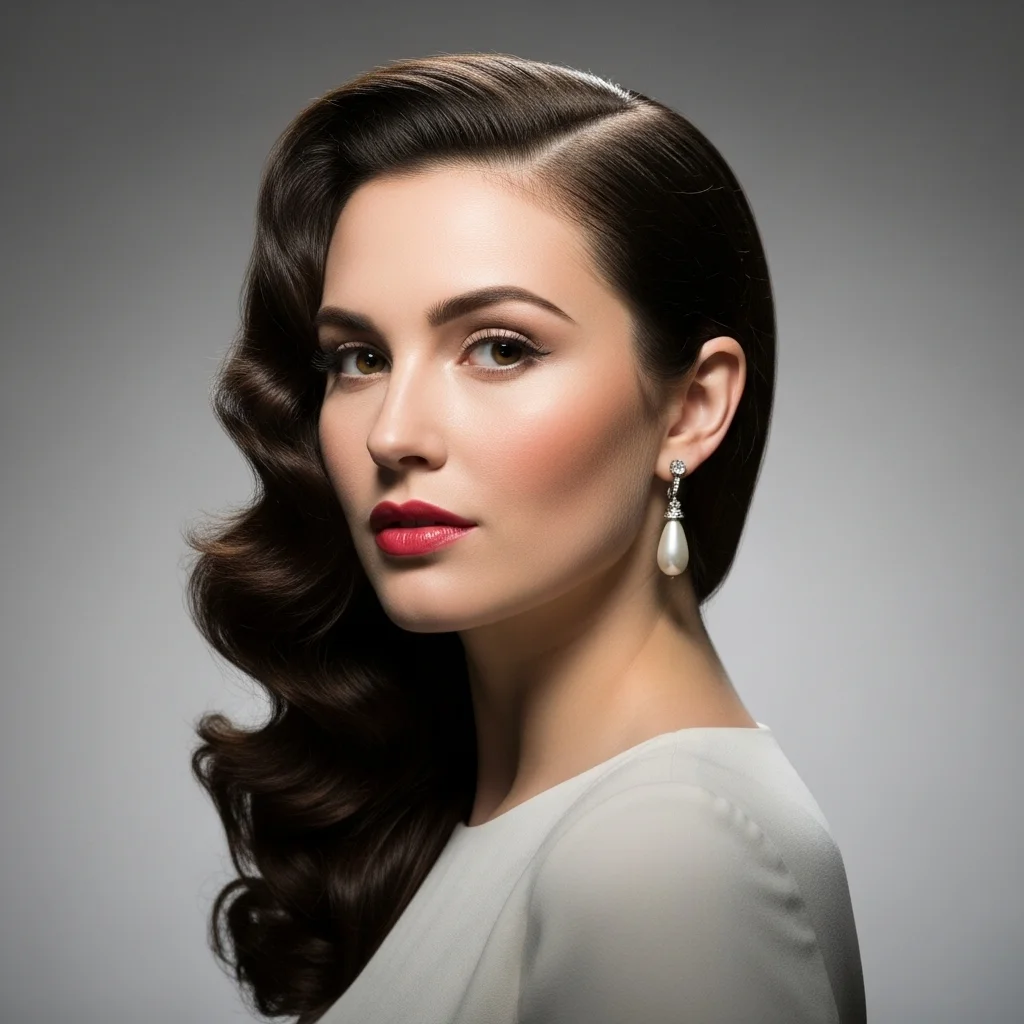
Grace and glamour defined: soft, sweeping waves with a deep side part, a 30s-40s classic.
6. Victory Rolls
Emerging during World War II, Victory Rolls became a defining hairstyle of the 1940s, symbolizing patriotism and resilience. This distinctive style features sections of hair rolled upwards and inwards, creating voluminous, often symmetrical, ‘rolls’ typically positioned on top of the head or framing the face. It was practical for women working in factories yet still allowed them to maintain a sense of style and glamour.
The name ‘Victory Rolls’ is said to be inspired by the ‘V for Victory’ sign, reflecting the spirit of the time. Today, they are a beloved choice for rockabilly enthusiasts, vintage fashion lovers, and anyone looking to make a bold, retro statement. Achieving perfect victory rolls requires backcombing for volume and careful pinning, resulting in a dramatic and eye-catching silhouette that truly captures the spirit of the 1940s.
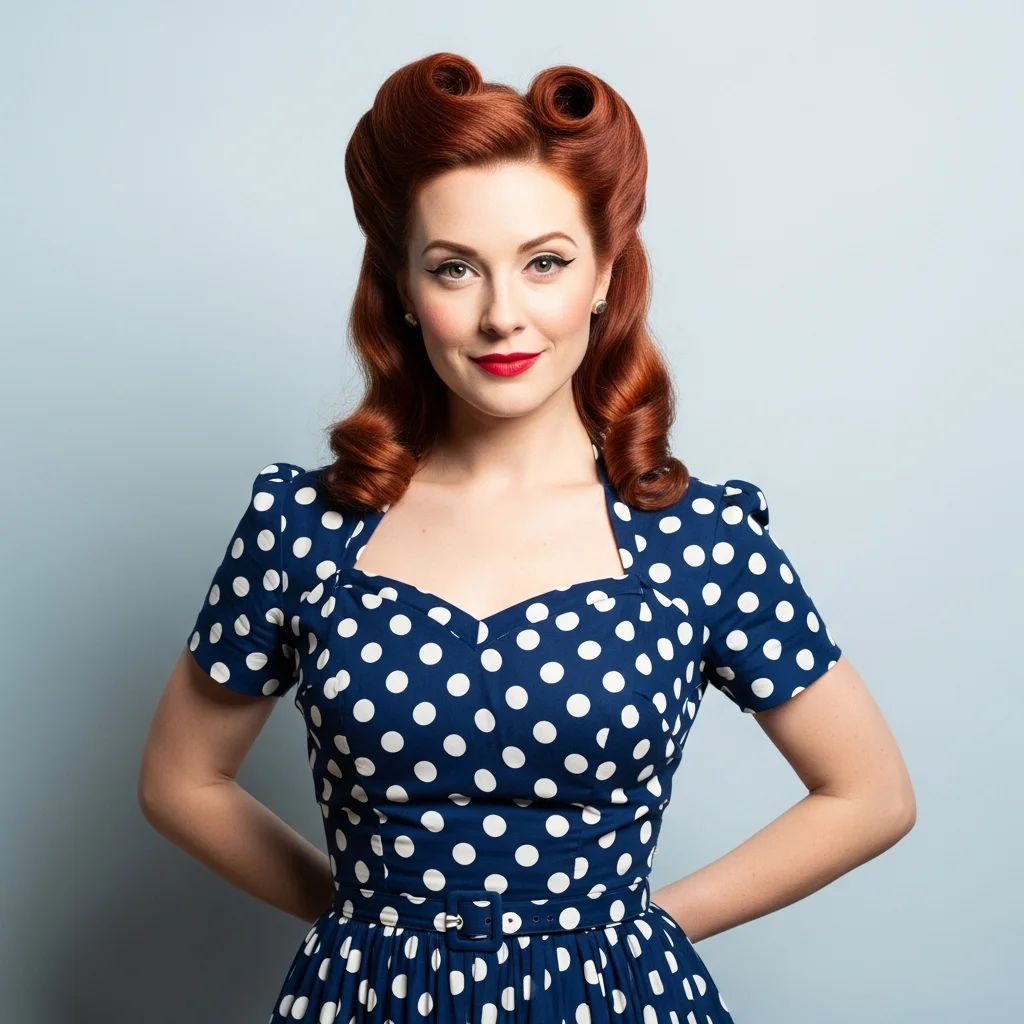
Iconic and patriotic: Victory Rolls, the definitive hairstyle of 1940s resilience and style.
7. Rosie the Riveter Bandana Style
Another iconic look from the 1940s, the ‘Rosie the Riveter’ bandana style, became synonymous with working women on the home front during WWII. This practical yet stylish look involved tying a bandana or scarf tightly around the head, often with the hair rolled or tucked underneath to keep it out of the way. It was a symbol of strength, capability, and understated glamour, combining functionality with a touch of wartime fashion.
This simple yet impactful style remains incredibly popular today for its ease, versatility, and powerful message of female empowerment. It’s perfect for adding a retro flair to a casual outfit, protecting your hair on a bad hair day, or for channeling that strong, independent ‘Rosie’ spirit. Experiment with different colors and patterns of bandanas to personalize this enduring wartime classic.
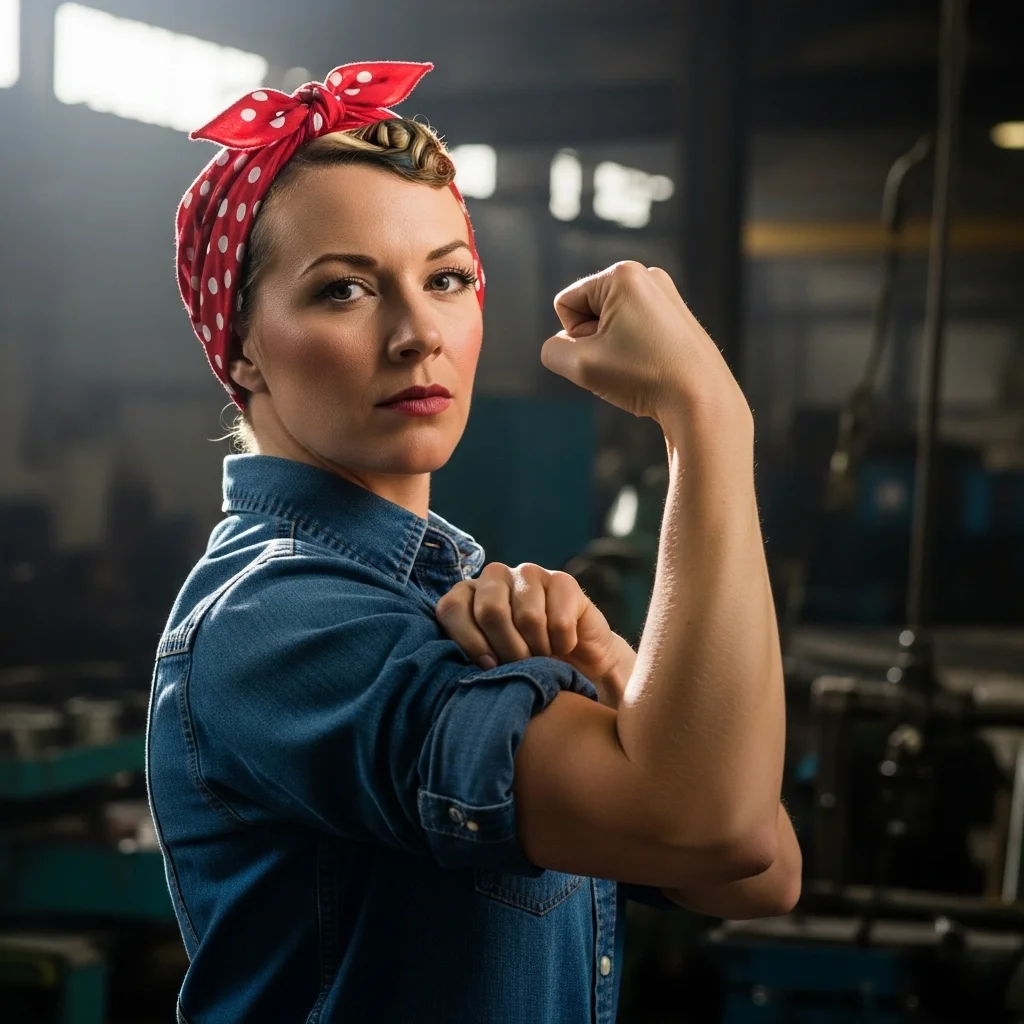
Strong, stylish, and iconic: the Rosie the Riveter bandana, a symbol of 1940s empowerment.
8. Hollywood Waves
Hollywood waves, a pinnacle of glamour from the 1940s and 1950s, epitomize the golden age of cinema with their deep, uniform, and incredibly polished S-shaped waves. This luxurious style is characterized by its liquid-like movement and high shine, often created using hot rollers or a large-barrel curling iron and then meticulously brushed out into a seamless, flowing pattern. It’s designed to exude sophistication and star power.
Frequently seen on silver screen legends like Marilyn Monroe and Veronica Lake, Hollywood waves are the epitome of red-carpet elegance, making them a perennial favorite for formal events and bridal styling. Achieving this flawless look requires careful attention to detail and a generous amount of setting spray to maintain its impeccable shape. When perfectly executed, Hollywood waves offer an unparalleled level of old-school glamour that is both breathtaking and enduring.
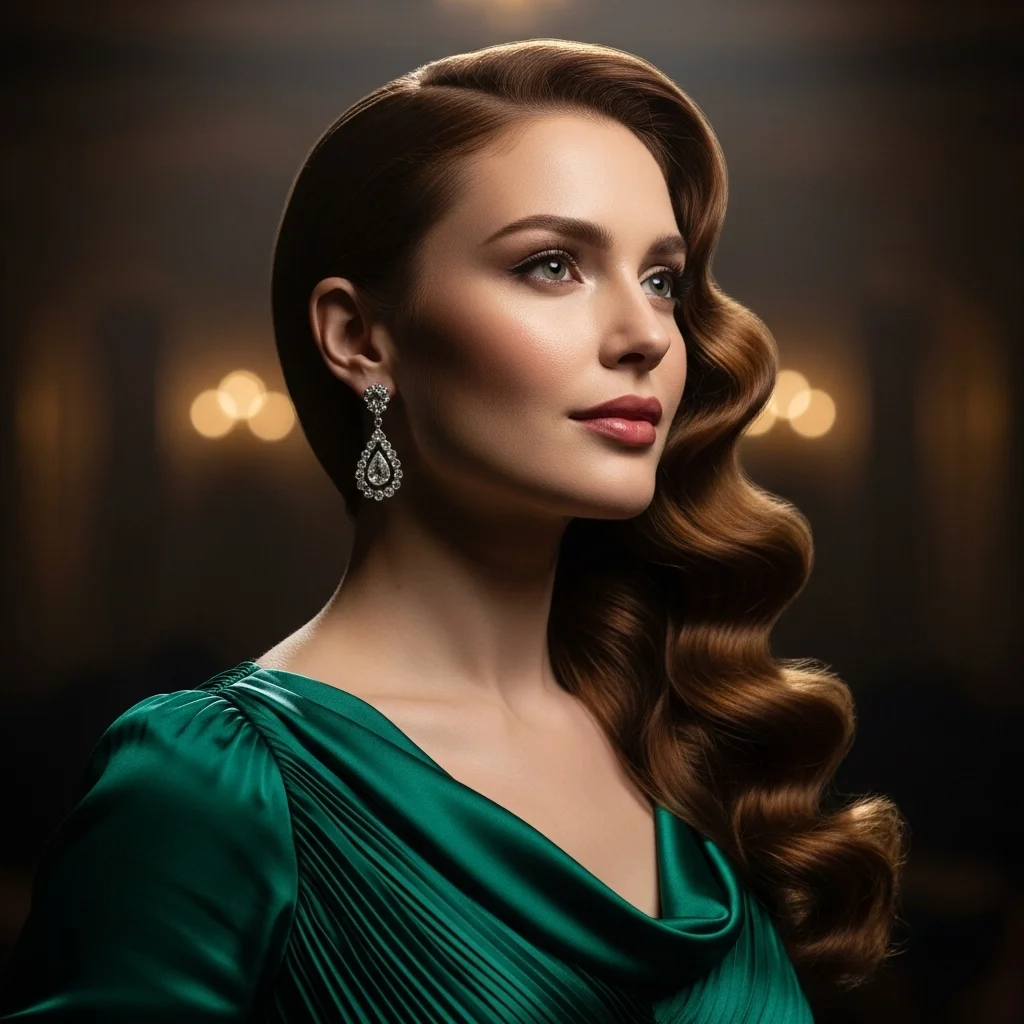
Pure silver-screen glamour: meticulously sculpted Hollywood waves, the epitome of vintage luxury.
9. The Pageboy
The Pageboy hairstyle gained popularity in the 1940s and remained a chic option through the 1960s, characterized by its smooth, medium-length hair that curled inwards at the ends. It’s often worn with a fringe or a side part, offering a neat, polished, and sophisticated look that suggests youthful innocence blended with refined grace. The style gets its name from medieval pageboys whose hair was traditionally cut in a similar fashion.
This elegant cut is surprisingly versatile and can be adapted to various hair textures, though it shines brightest on straight or slightly wavy hair. Its clean lines and gentle inward curl provide a timeless appeal that can be both casual and formal, depending on how it’s styled. The Pageboy offers a lovely alternative to more elaborate updos, providing a classic vintage feel with minimal fuss, perfect for a refined everyday look or a special occasion.
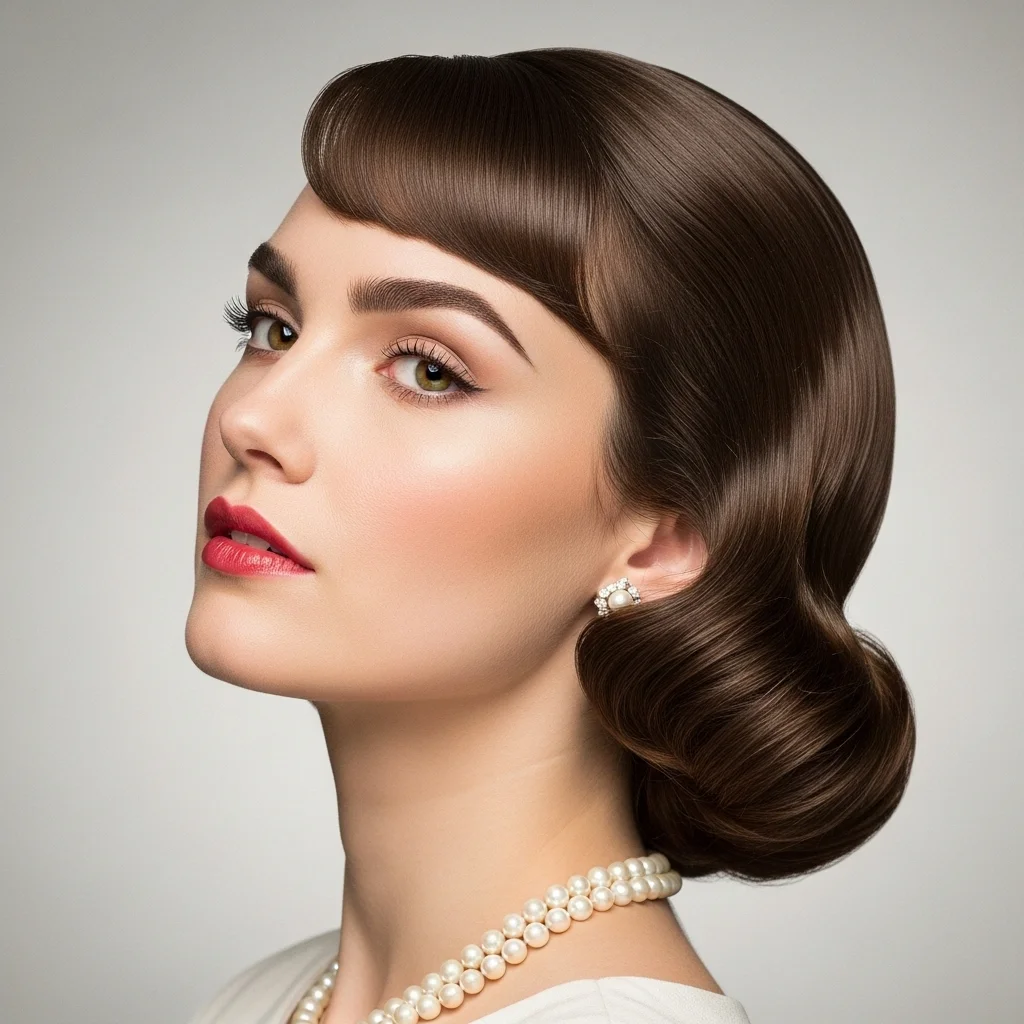
The refined charm of the Pageboy: smooth, inward-curling elegance from the mid-20th century.
10. The Poodle Cut
Made famous by stars like Lucille Ball and Elizabeth Taylor in the 1950s, the Poodle Cut is a playful, tightly curled short hairstyle that exudes charm and vivacity. This distinctive look features an abundance of bouncy, defined curls that are often swept up and away from the face, creating a voluminous, rounded silhouette. It’s a style that embraces fun and personality, perfect for those with naturally curly hair or who enjoy a vibrant, playful aesthetic.
The Poodle Cut perfectly encapsulates the cheerful, optimistic spirit of the 1950s, offering a bold yet feminine statement. While it might seem challenging to achieve, modern perming techniques or diligent use of small-barrel curling irons can recreate this iconic look. It’s an ideal choice for anyone wanting to infuse their style with a dose of authentic retro flair and a touch of Hollywood Golden Age sparkle.
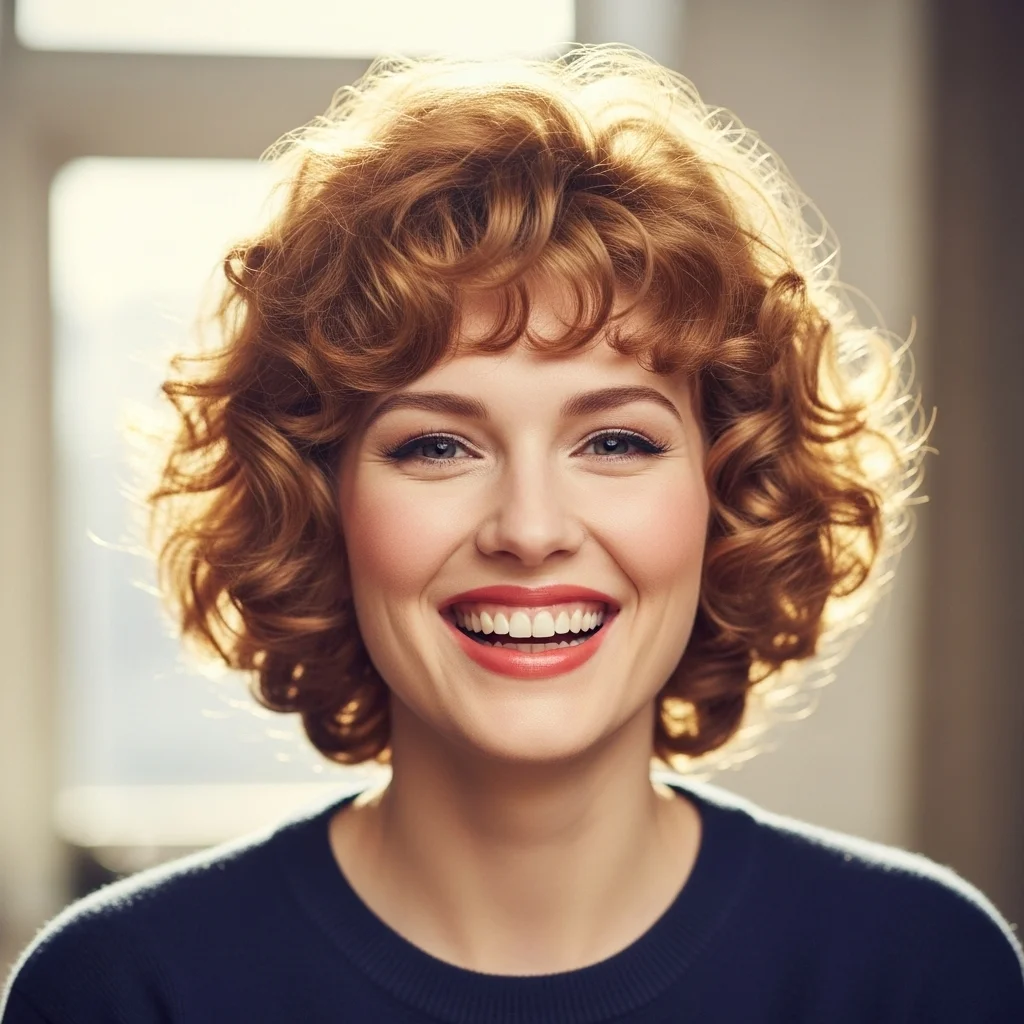
Playful and vivacious: the Poodle Cut, a curly, charming icon of 1950s style.
11. Bettie Bangs
Named after the iconic pin-up model Bettie Page, Bettie Bangs are a distinctive, short, blunt fringe that curves slightly upwards at the sides, creating a unique heart-shaped or crescent moon silhouette. Popularized in the 1950s, this daring and playful fringe perfectly frames the eyes, adding a bold, sultry, and instantly recognizable retro edge to any hairstyle. It’s a statement fringe that demands attention and exudes confidence.
Bettie Bangs are a favorite among rockabilly and vintage enthusiasts, offering a bold yet feminine touch that can transform a simple ponytail or updo into a striking vintage statement. While they require regular trims to maintain their precise shape, their impact is undeniable. If you’re looking to inject a serious dose of 1950s pin-up attitude and a touch of rebellious glamour into your look, Bettie Bangs are the ultimate choice.
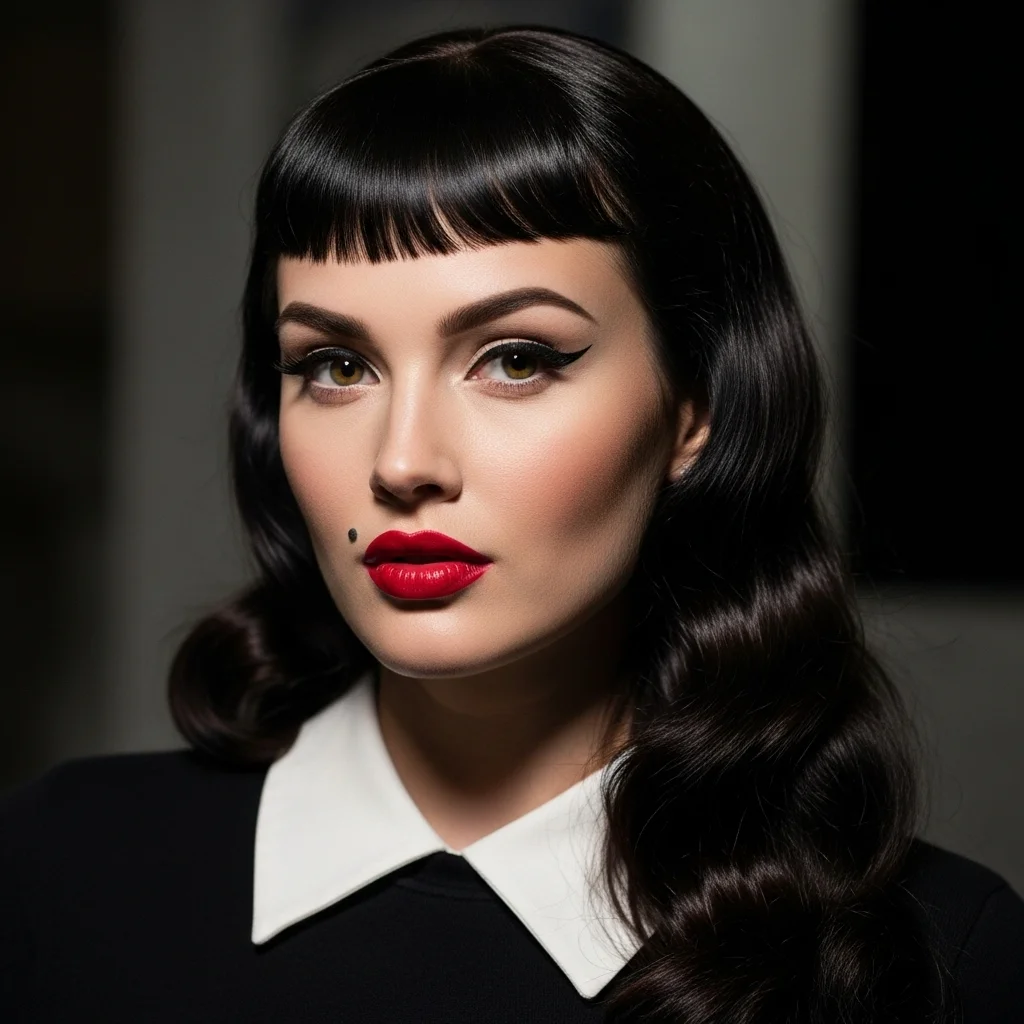
Daring and iconic: Bettie Bangs, the quintessential 1950s pin-up fringe that commands attention.
12. The Beehive
The Beehive, arguably the most recognizable hairstyle of the early 1960s, is a towering, voluminous updo achieved by intensely backcombing the crown section of the hair and then shaping it into a high, rounded dome. Often paired with a sleek front or side-swept fringe, this architectural style exuded sophistication and a hint of playful daring. It became synonymous with fashion icons like Audrey Hepburn and Dusty Springfield, symbolizing a new era of glamour.
This dramatic hairstyle adds instant height and an undeniable sense of occasion, making it a show-stopping choice for anyone wanting to channel 1960s mod chic or classic sophistication. While it appears complex, the basic principle involves significant teasing and careful smoothing. The Beehive remains a popular choice for high-fashion editorials and vintage-themed events, proving its timeless appeal as a truly iconic statement look.
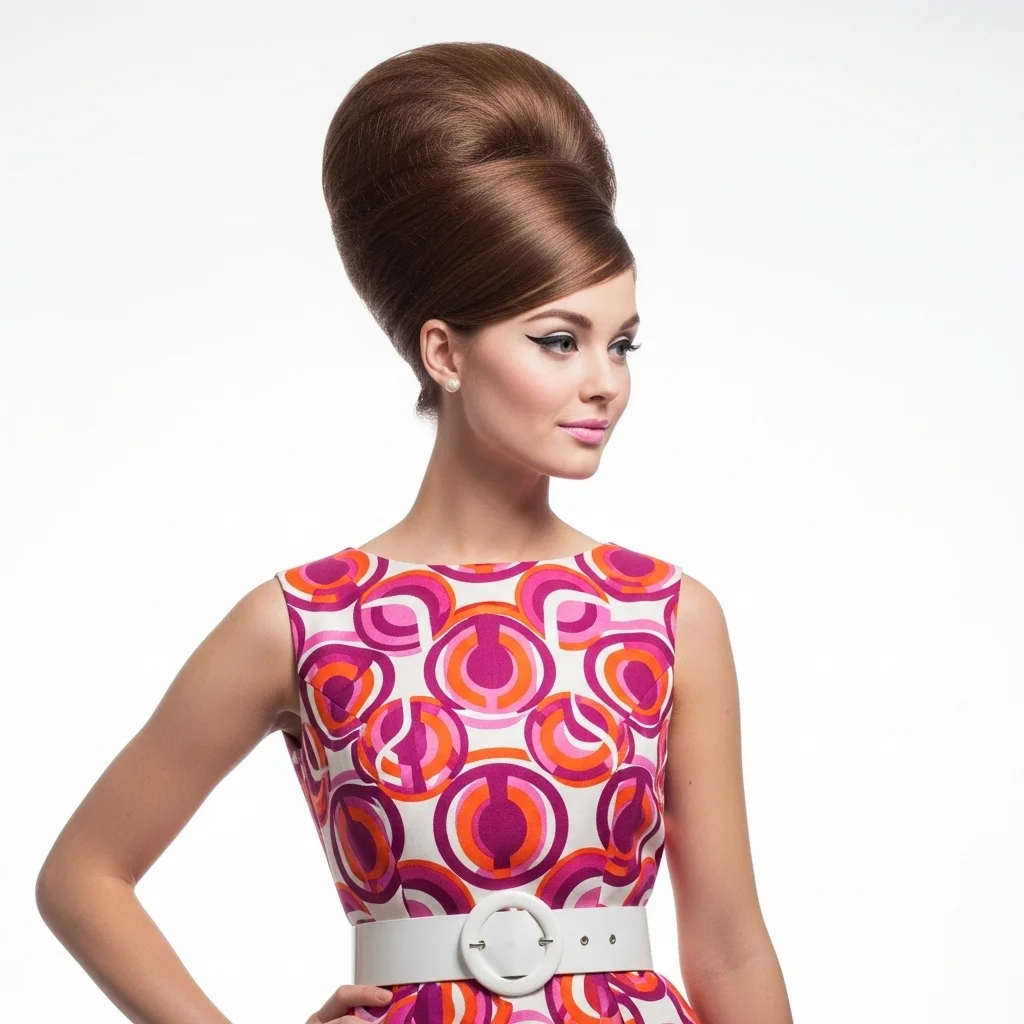
Towering elegance: the iconic Beehive, the definitive high-volume statement of the 1960s.
13. The Bouffant
Closely related to the beehive but generally softer and more rounded, the bouffant was another dominant hairstyle of the 1960s, offering voluminous height at the crown without the extreme structure of its counterpart. This elegant style involved backcombing the hair at the top of the head to create a plush, airy lift, with the sides and back often swept smoothly or gently curled. It provided a sophisticated yet glamorous silhouette that was favored by First Lady Jackie Kennedy.
The bouffant offered a versatile option for women seeking elegance and volume, fitting seamlessly into both formal and more casual settings of the era. Its enduring appeal lies in its ability to add instant lift and a polished finish without appearing overly stiff. Modern interpretations often incorporate less extreme backcombing, focusing instead on creating natural-looking volume for a soft, refined retro touch.
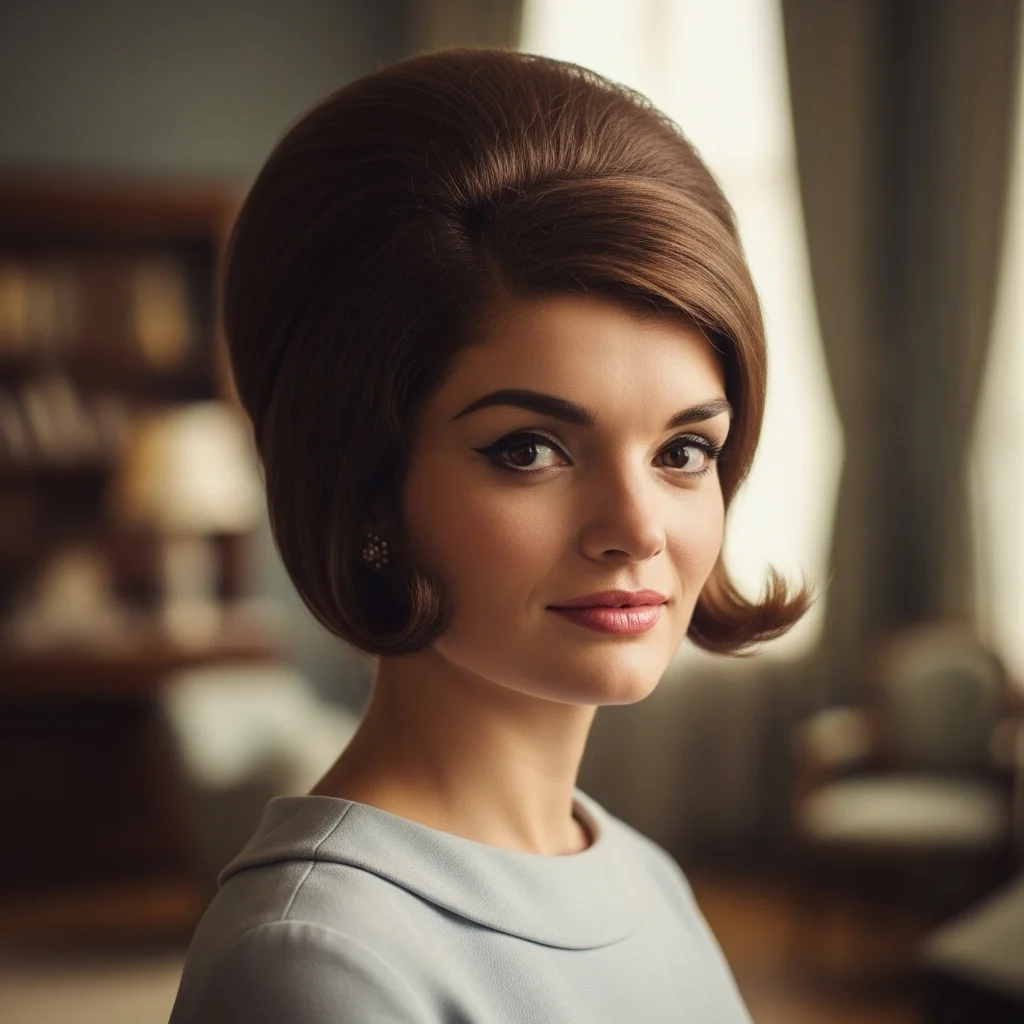
Refined volume: the Bouffant, a softer yet equally glamorous staple of 1960s elegance.
14. The Flip
The ‘Flip’ hairstyle was a quintessential look of the mid to late 1960s, characterized by hair that was usually shoulder-length or shorter, with the ends curled outwards in a distinctive, bouncy flick. This playful and energetic style often featured a side-swept fringe or bangs, adding to its youthful and carefree vibe. It became incredibly popular, epitomizing the fun-loving spirit of the decade.
Iconic figures like Jackie Kennedy and various pop singers helped popularize the flip, making it a fresh alternative to the more structured beehive or bouffant. It’s a relatively easy style to achieve with a round brush and blow dryer or hot rollers, making it accessible for everyday wear. The flip remains a beloved retro style for its charming simplicity and ability to add a touch of playful sophistication to any look, perfectly capturing the optimistic mood of its time.
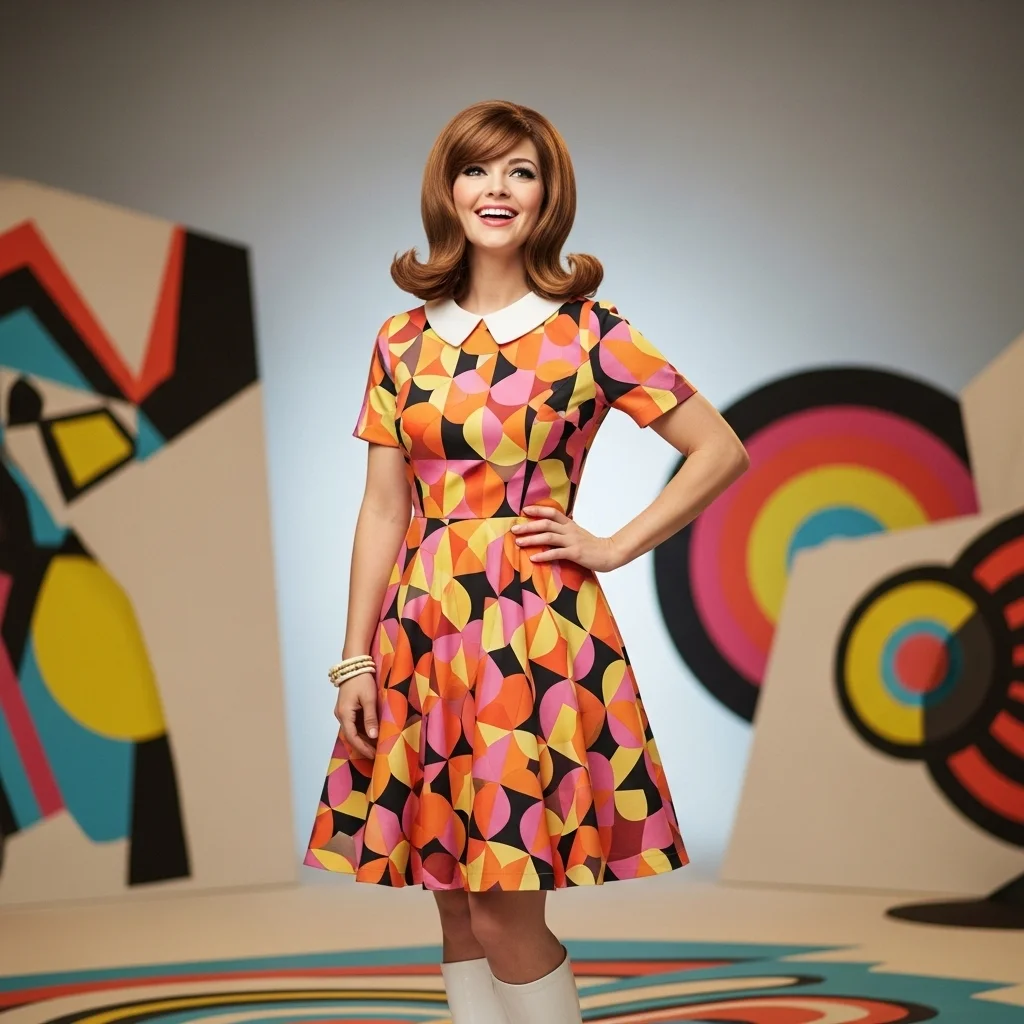
Playful sophistication: The Flip, the bouncy, outward-curled sensation of the swinging sixties.
15. High Ponytail with Bangs
While ponytails are timeless, the high ponytail with bangs saw a distinct surge in popularity during the 1950s and 60s, becoming a symbol of youthful exuberance and casual chic. This playful style often featured a neatly tied high ponytail, sometimes wrapped with a scarf or ribbon, complemented by a soft, sweeping fringe or a blunt cut bang. It was a go-to for teenagers and young women, offering both practicality and undeniable charm.
This look is incredibly versatile, easily transitioning from a casual daytime outing to a more dressed-up evening event with the right accessories. It provides an instant lift to the face and highlights the cheekbones, embodying a fresh, energetic vintage aesthetic. Recreate this look with a sturdy hair tie, a volumizing spray for the crown, and a touch of hairspray to keep those bangs perfectly in place for an effortlessly cool retro vibe.
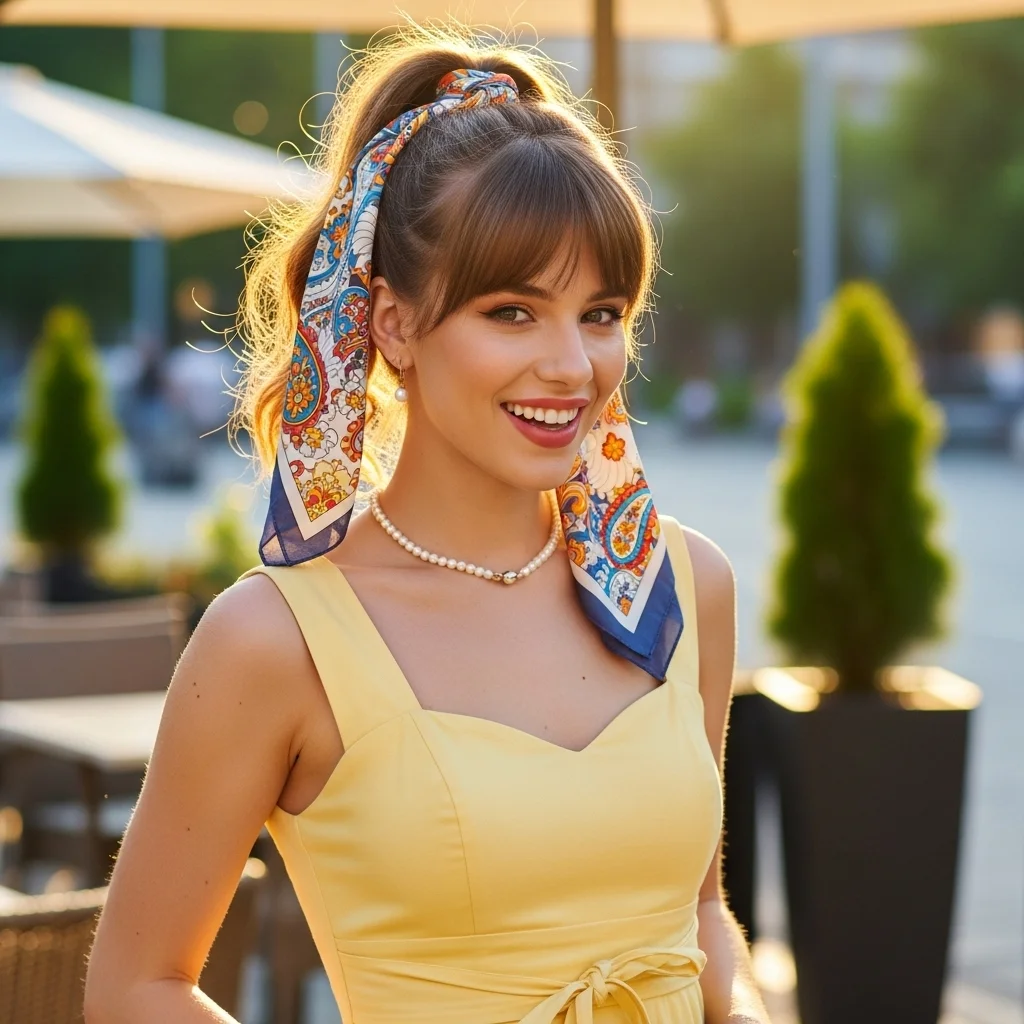
Youthful zest: the high ponytail with bangs, a playful and chic staple of the 50s and 60s.
16. Half-Up, Half-Down with Volume
The half-up, half-down hairstyle, especially with significant volume at the crown, gained immense popularity in the 1960s as a sweet yet sophisticated look. It offered a beautiful compromise between wearing hair entirely down and a formal updo, perfectly framing the face while keeping some hair neatly secured. This style typically featured backcombed hair at the crown for height, with the top sections pulled back and pinned, allowing the rest of the hair to flow freely.
This charming style is incredibly flattering and adaptable, making it a popular choice for weddings, proms, or simply adding a touch of vintage elegance to everyday attire. It highlights facial features while showcasing the length and texture of the hair. To achieve this look, focus on creating ample volume at the crown using teasing or a Bumpit, then carefully smooth and secure the top layers for a polished finish that channels classic 60s grace.
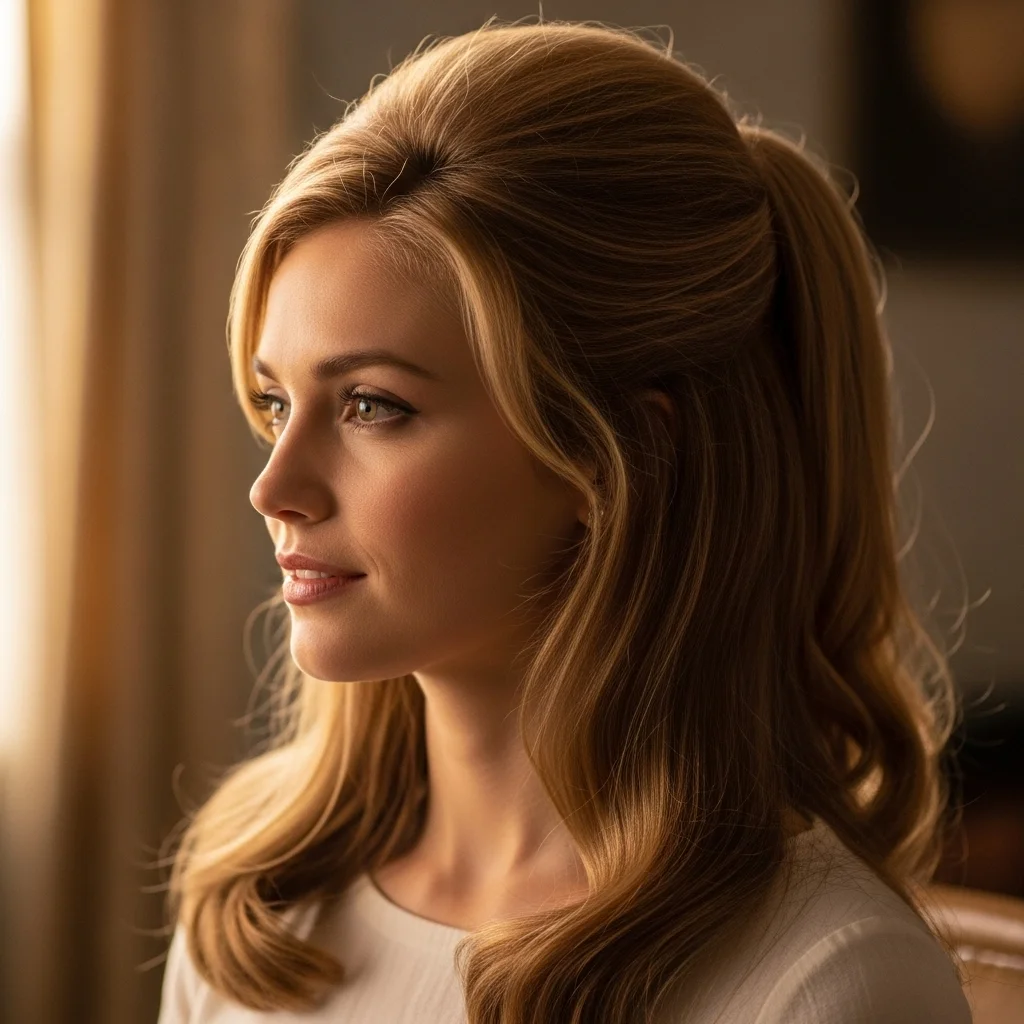
Sweet sophistication: the voluminous half-up, half-down, a charming classic of the 1960s.
17. Sleek Low Bun
The sleek low bun, a timeless classic, found particular prominence in the 1920s and 30s as a sophisticated, minimalist alternative to more ornate updos. This elegant style features hair pulled back smoothly from the face and gathered into a neat bun at the nape of the neck, often with a deep side part or a smooth center part. It exuded an understated glamour and polish, perfectly complementing the streamlined fashions of the Art Deco era.
Its enduring appeal lies in its simplicity, versatility, and sophisticated grace, making it a perennial favorite for formal occasions, professional settings, or simply for an effortlessly chic look. It’s an ideal choice for showcasing elegant jewelry or high necklines, drawing attention to the face and décolletage. To achieve this impeccable style, ensure hair is meticulously smoothed with gel or serum before gathering and securing for a truly flawless finish.
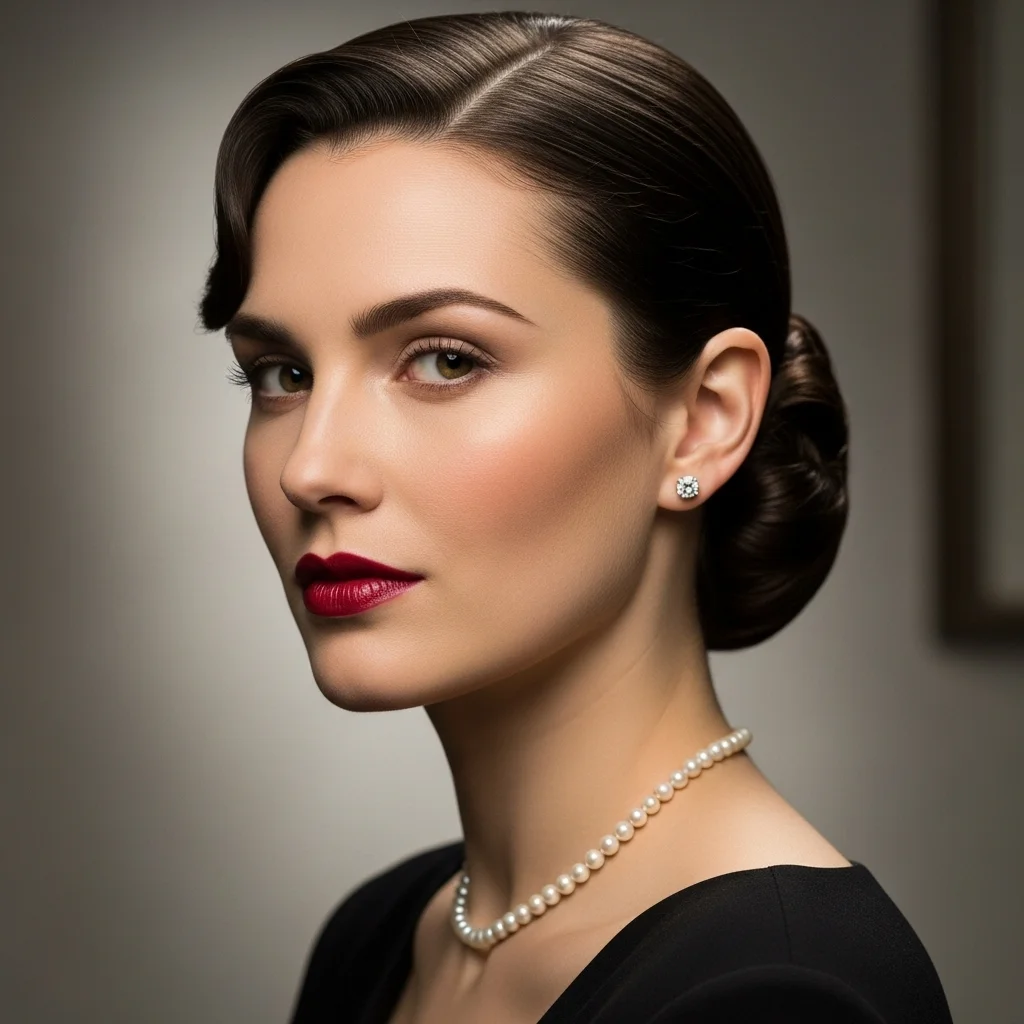
Understated glamour: the sleek low bun, a timeless symbol of minimalist sophistication from the 20s-30s.
18. The Gibson Tuck
While the Gibson Tuck dates back to the late Victorian and Edwardian eras, its simple elegance has seen it revived and adapted across various vintage periods, making it a versatile classic. This style involves gathering hair and rolling it upwards and inwards, tucking it into itself at the back of the head to create a soft, voluminous roll. It offers a charmingly natural yet polished look, often accompanied by soft tendrils around the face.
Its effortless grace makes it a beloved choice for those seeking a vintage updo that is both elegant and relatively easy to achieve without excessive styling products. The Gibson Tuck is perfect for showcasing delicate necklines or statement earrings, adding a touch of romantic historical flair to any ensemble. It’s a beautifully understated choice that proves the enduring power of classic, uncomplicated beauty.
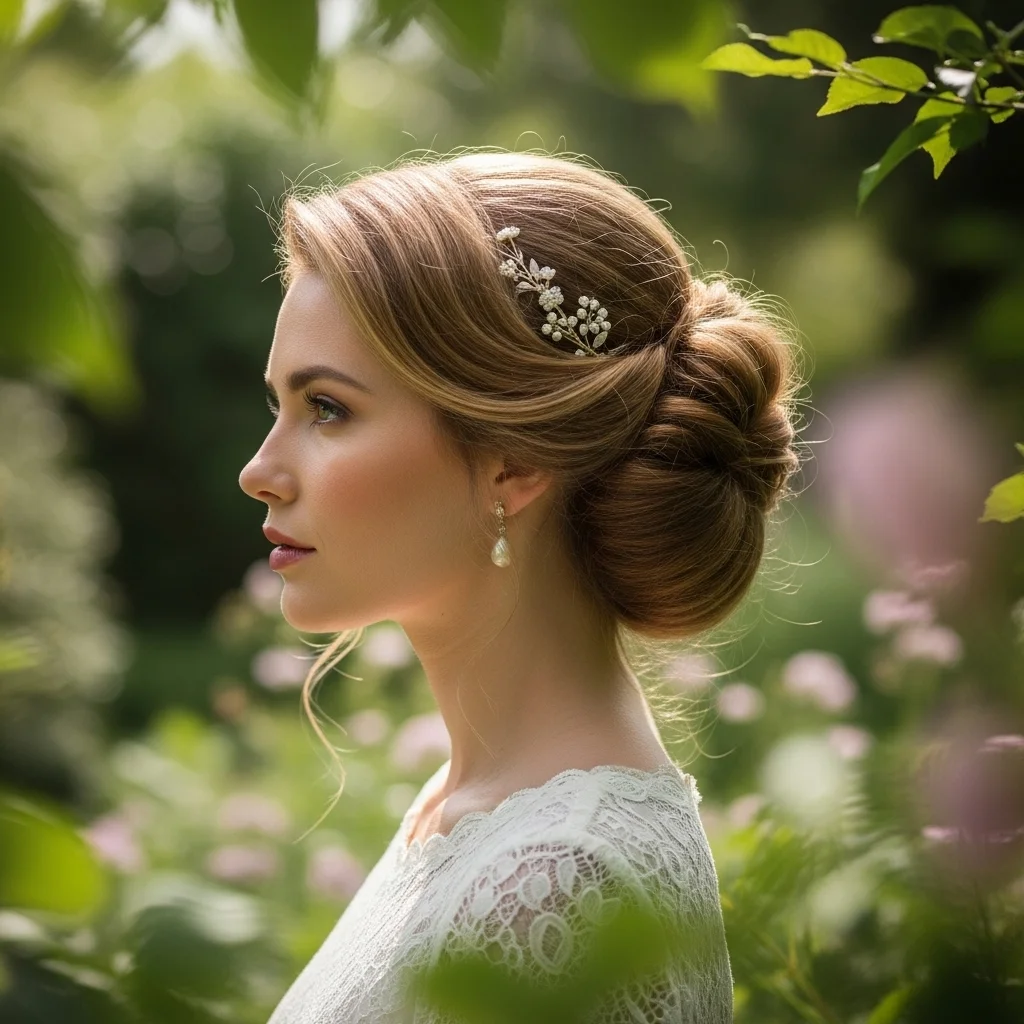
Romantic and timeless: the Gibson Tuck, an effortlessly elegant roll that transcends eras.
19. Deep Side Part with Waves
The deep side part combined with soft waves was a pervasive and incredibly glamorous look throughout the 1930s and 1940s, embodying Hollywood’s golden age sophistication. This style emphasizes asymmetry, with a dramatic part that sweeps a significant portion of hair across the forehead, often leading into a cascade of soft, polished waves. It created an aura of mystery and allure, elegantly framing one side of the face.
This particular combination of a deep side part and flowing waves exudes an unparalleled sense of vintage allure, making it a perfect choice for those aiming for old-school elegance. It’s a versatile look that can be adapted for various hair lengths and textures, offering a powerful statement of classic beauty. Recreate this look with a fine-tooth comb for the part and a large-barrel curling iron or hot rollers for the sweeping, glossy waves, ensuring a truly glamorous and iconic finish.
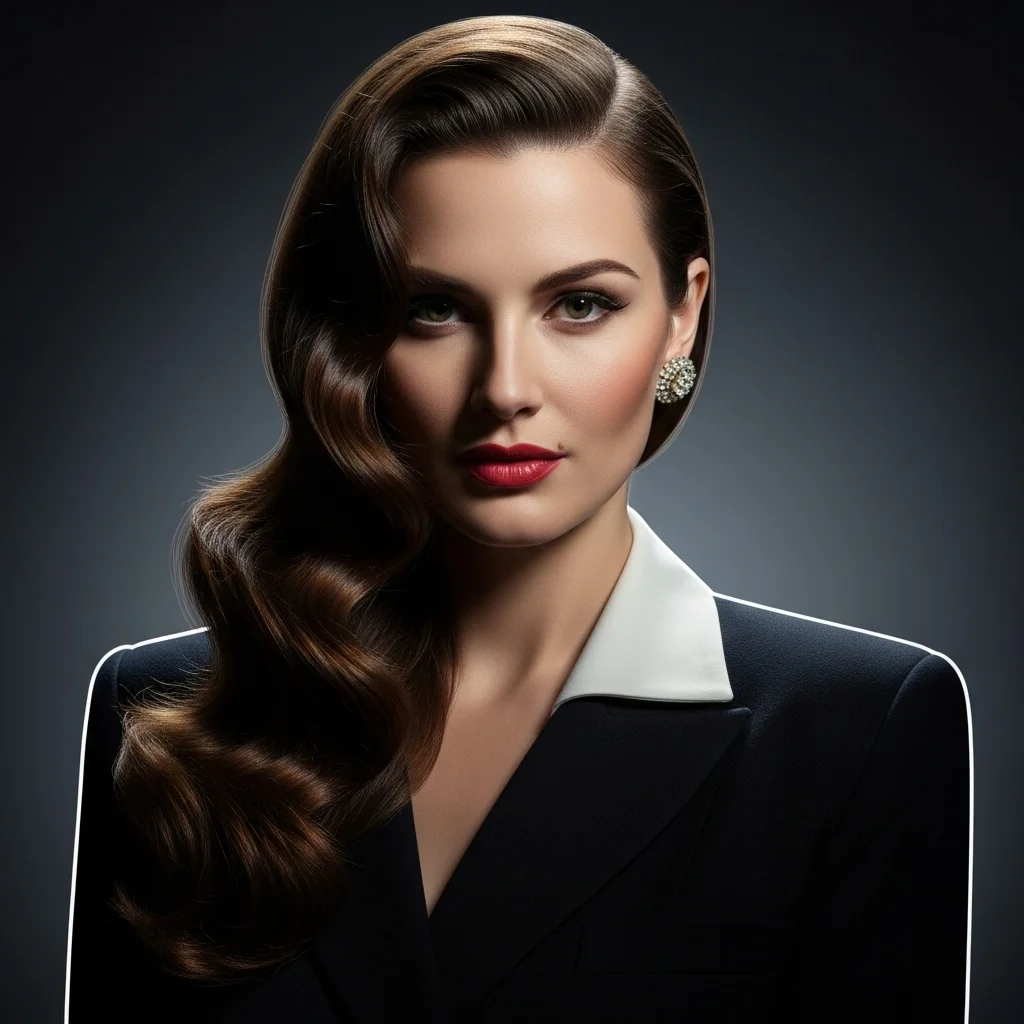
Sophistication personified: the dramatic deep side part with flowing waves, a signature of 30s-40s glamour.
Conclusion
As we’ve journeyed through these 19 magnificent vintage hairstyles, it’s clear that the allure of bygone eras continues to hold a powerful sway over modern aesthetics. From the daring flapper bobs and intricate finger waves of the 1920s to the sky-high beehives and playful flips of the 1960s, each style tells a story of cultural shifts, sartorial revolutions, and the timeless pursuit of elegance. These looks are more than just hairdos; they are wearable art, embodying the spirit and glamour of their respective decades.
Embracing vintage hairstyles allows us to connect with history, celebrate classic beauty, and inject our personal style with a unique, sophisticated flair. Whether you’re drawn to the sultry Hollywood waves, the spirited Victory Rolls, or the charming Pageboy, there’s a vintage look for every occasion and personality. So, next time you’re seeking hair inspiration, don’t be afraid to step back in time. Experiment with these timeless tresses and discover the enduring magic of vintage glamour – which iconic style will you try first?